
Kouroi of Naxos are a set of early examples of monumental Archaic Greek marble sculpture. Carved during the 7th and 6th centuries BCE (Archaic Period), these oversized marble statues represent a critical evolutionary step in the transition from the smaller Daedalic style to the more naturalistic Classical tradition.
The Kouroi of Naxos represent a pinnacle of Archaic Greek sculpture, marking the transition to monumental stone carving in the 7th and 6th centuries BCE. Characterized by their rigid, frontal posture and stylized musculature, these "youth" figures were carved from the island's renowned high-quality white marble and served as both votive offerings to deities and commemorative funerary markers.
The significance of the Naxian school lies in its scale and technical ambition, evidenced by the colossal unfinished statues remaining in the quarries of Apollonas and Melanes. These abandoned artifacts provide critical archaeological insight into ancient quarrying techniques, illustrating how master masons roughed out monumental forms before transport.
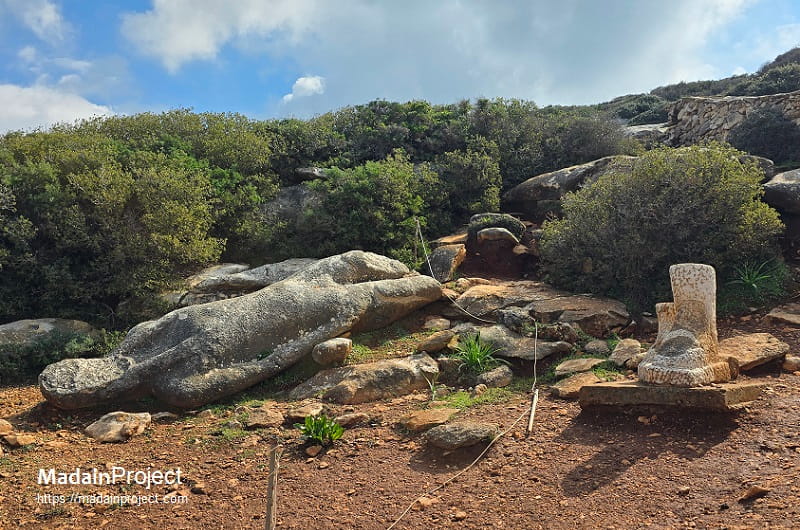
circa 700-600 BCE

The creation of the Kouroi of Naxos was defined by a sophisticated, multi-stage process that began deep within the island’s mountainous quarries. The primary material used was Naxian marble, a high-quality, large-grained crystalline stone composed of over 98% calcite. This specific marble is renowned for its transparency, which allows light to penetrate the surface and gives the stone a distinctive "depth" and a slight blue-grey shimmer. Because Naxian marble is exceptionally resistant to weathering, it was the ideal medium for the monumental, open-air statues favored by the aristocratic patrons of the Archaic period.
The technical process followed a strict "roughing out" phase conducted in situ at the quarry to facilitate transport. Sculptors used a variety of iron and bronze tools, including point chisels to strike away large chunks of stone and tooth (claw) chisels to refine the anatomical forms. To isolate a colossal block from the bedrock, workers would often cut a "trench" or ditch around the figure, sometimes large enough for a person to sit in while they worked the back of the statue. Once the figure was roughly shaped, it was detached from the bedrock using heavy levers or wooden wedges that were soaked in water to expand and split the stone along natural fault lines.
Transportation posed the greatest risk in the construction sequence. To reduce the massive weight and protect them during transit—such as the 80-ton Kouros of Apollonas—the statues were only partially finished at the quarry. They were likely moved toward the coast using a system of wooden sledges, rollers, and ropes, potentially aided by the island’s seasonal riverbeds which provided smoother paths during dry months. The three famous abandoned kouroi on Naxos today serve as "frozen" records of this process; they were left behind specifically because structural fractures or accidents during this hazardous transport phase rendered them imperfect. Had they reached their destinations, they would have undergone final detailing with fine chisels and abrasives like emery sand before being polished to a high sheen.
circa 700-600 BCE
Kouros of Flerio Quarry
The kouros of Flerio quarry, situated in an ancient marble quarry near the village of Melanes, is a premier example of 6th-century BCE Naxian monumental sculpture preserved in situ. Measuring approximately 5.5 metres in length, the statue depicts a traditional archaic youth lying on its back, abandoned by ancient masons after the left foot fractured during its extraction or attempted transport. The figure exhibits the classic Naxian style, characterized by a slim torso, stylized ribcage, and "archaic" facial features, all carved from the local high-quality crystalline marble. Because it remains in its original production context, the Kouros of Flerio provides essential archaeological evidence of the "roughing out" technique, where sculptors shaped the figure directly into the bedrock before detachment, leaving behind visible tool marks from point and claw chisels.
circa 700-600 BCE
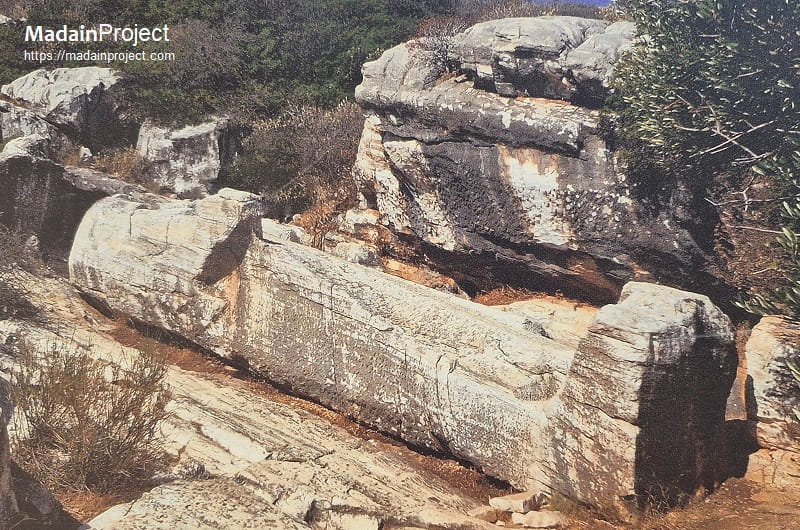
Kouros of Apollonas
The Kouros of Apollonas, also known as the Colossus of Dionysus, is the largest and most ambitious of the unfinished Naxian statues, located in the northern ancient quarry of Apollonas. Dating to the early 6th century BCE, this massive figure measures approximately 10.7 metres (35 feet) in length and weighs an estimated 80 tons, carved from the local light-grey Naxian marble.
Unlike the typical youth depicted in the kouros tradition, this figure is distinguished by its bearded face (inspect) and a long, stylized cloak, which has led most scholars to identify it as a representation of the god Dionysus rather than a mortal athlete. The statue lies on its back, still partially attached to the bedrock from which it was being hewn.
The Colossus was abandoned in situ because of extensive structural fractures that appeared in the marble during the carving process. Because the stone was too brittle to survive the hazardous transport down the steep mountainside to the sea, the ancient masons halted production. Today, the statue provides a "snapshot" of Archaic engineering, clearly showing the deep channels cut around the body and the rough, point-chisel marks where the sculptors were refining the limbs and torso before the fatal cracks were discovered.
circa 700-600 BCE
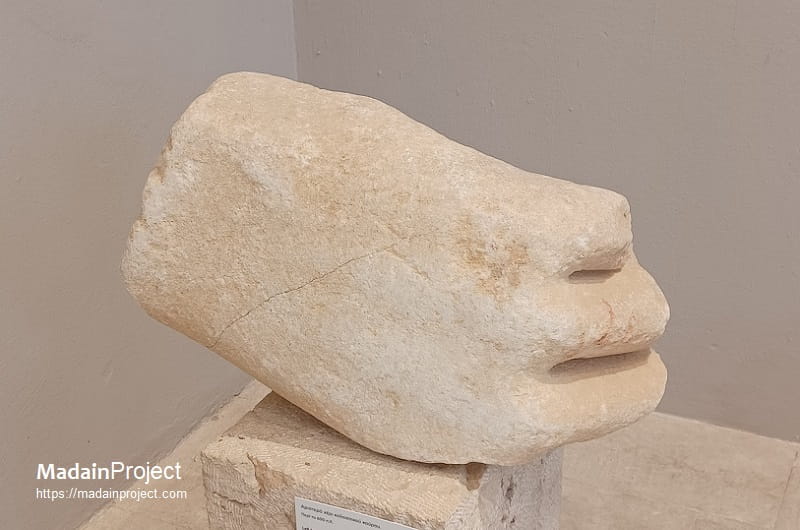
Colossus of the Naxians
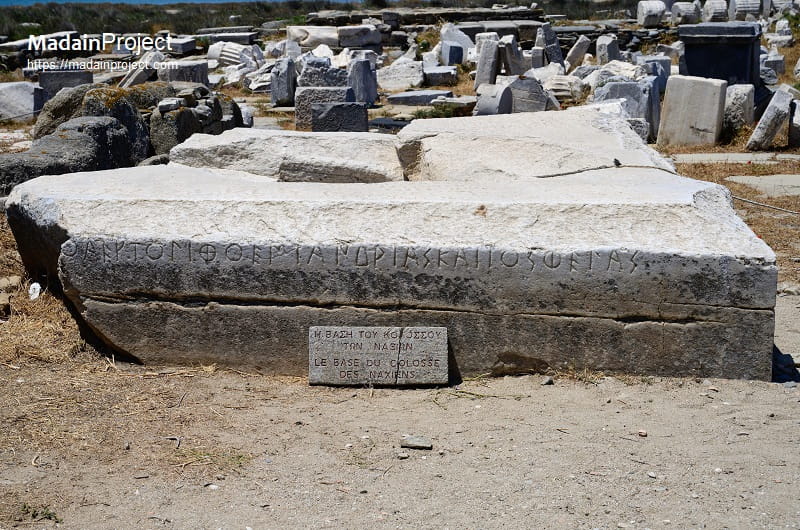
The Colossus of the Naxians was a monumental marble statue of Apollo, dedicated by the people of Naxos to the sanctuary on the sacred island of Delos around 600 BCE. Standing approximately 9 metres (30 feet) tall, it was one of the largest free-standing sculptures of the Archaic period and served as a powerful advertisement of Naxian wealth and their mastery over the local crystalline marble. It is carved from a single massive block of white Naxian marble. The base (inspect) bears a famous archaic inscription in the Naxian alphabet: "I am of the same stone, statue and base" (referring to its monolithic construction), along with a later 4th-century BCE addition stating, "The Naxians to Apollo".
It followed the traditional Kouros form—a nude male youth with a rigid, frontal stance—though its sheer scale required advanced engineering for transport and upright installation.
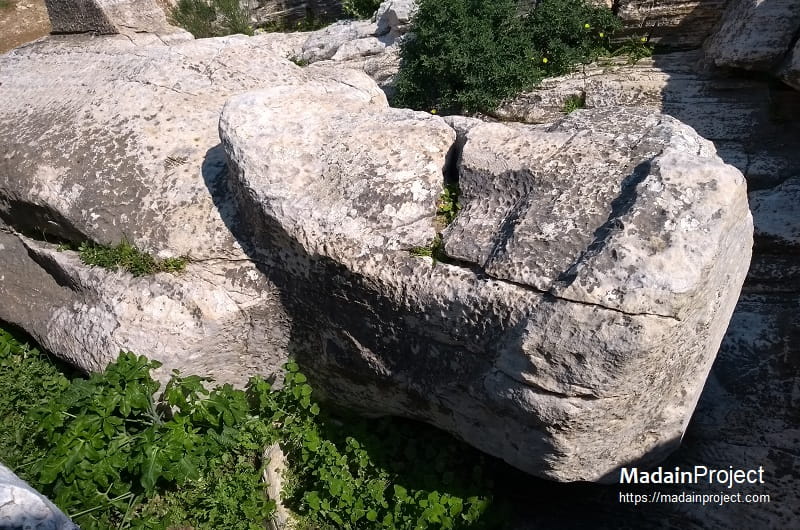
Today, the Colossus exists in massive fragments near the Temple of the Delians on Delos. The most recognizable remains include the colossal torso, part of the hips, and the massive marble base. One of its original feet is held in the British Museum, while a hand is preserved in the Delos Archaeological Museum. The statue reportedly fell and broke centuries ago, possibly during an attempt to move it or due to a natural disaster.
While the "Colossus of Dionysus" remained unfinished in the Apollonas quarry on Naxos, the Colossus of the Naxians is the successful "finished" counterpart. It proves that Naxian masons were capable of transporting and erecting 30-ton marble blocks across the sea, a feat of logistics that defined Naxian influence in the 6th century BCE.
circa 700-600 BCE
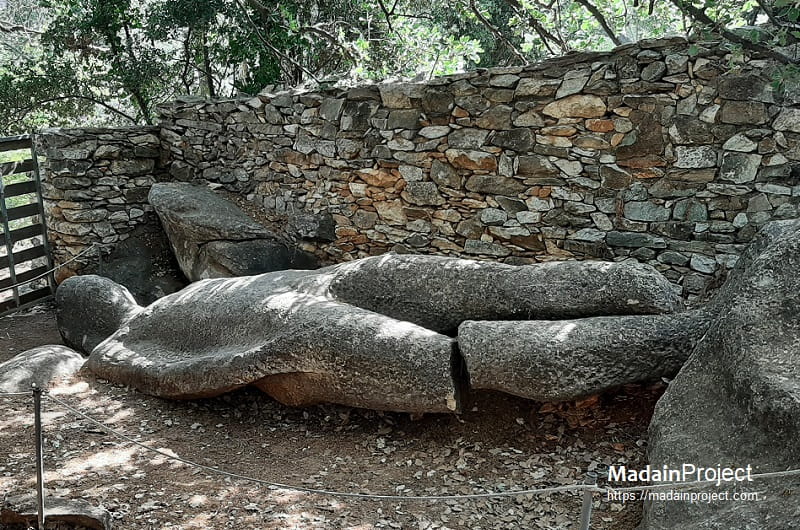
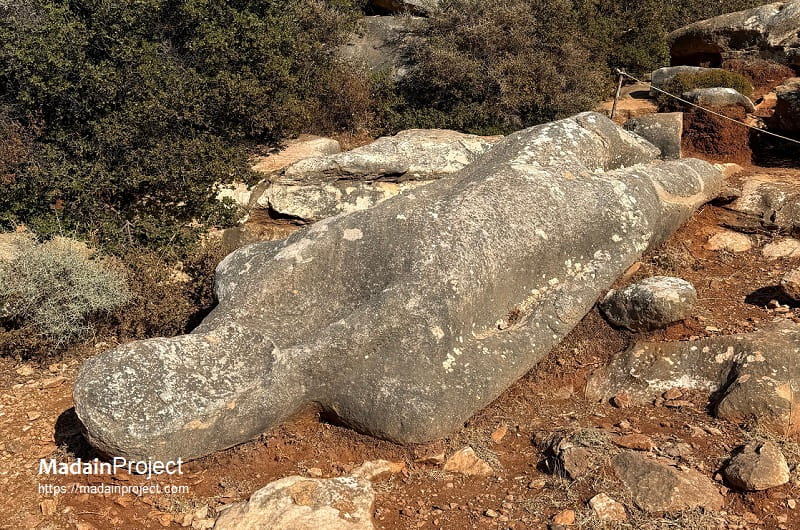
Kouros of Flerio Garden
The Kouros of Flerio Garden (also known as the Melanes Kouros) is one of two significant 6th-century BCE statues located in the lush valley of Flerio. Unlike its counterpart still lying in the nearby hillside quarry, this 5.5-metre figure lies horizontally within a private orchard, where it has remained since antiquity. Carved from local Naxian marble, the statue represents a typical Archaic youth (kouros) with its arms held rigidly at its sides and the left leg traditionally advanced. It was likely abandoned during transport from the uphill quarry to the coast after its feet snapped off, a common structural failure in monumental marble carving. Today, the statue is a key archaeological site for studying Archaic aesthetics, as its surface clearly displays the transition from rough quarrying marks to the finer, more detailed anatomical shaping of the torso and thighs.
Signup for our monthly newsletter / online magazine.
No spam, we promise.

The Madain Project is an online archive of Abrahamic History and Archaeology.
Abrahamic History & Archaeology is the study of history and archaeology with respect to the three Abrahamic Faiths without considering the religious and theological aspects. The goal of Abrahamic History is to understand how and why the religious doctrines and behaviours have evlovled and changed over time. Searching for patterns in the evolution of significant cultural events such as the development of farming, the emergence of cities, or the collapse of major civilizations for clues of why and how these have influenced the three major Abrahamic religions.
Cloud Drive -
About -
Help -
Privacy Policy -
Contact
Madain Project: Encyclopedia of Abrahamic History & Archaeology.
Copyright MadainProject 2017 - 2026.


